Thursday, November 29, 2012

The War on Men: A Digest


On Monday, Suzanne Venker published a brief article in which she argues:

I’ve accidentally stumbled upon a subculture of men who’ve told me, in no uncertain terms, that they’re never getting married. When I ask them why, the answer is always the same.

Women aren’t women anymore.

...Fortunately, there is good news: women have the power to turn everything around. All they have to do is surrender to their nature – their femininity – and let men surrender to theirs.

If they do, marriageable men will come out of the woodwork.

Unsurprisingly, the very women who Venker labels as "angry" and "defensive" were outraged by the suggestion and did not hesitate to express that outrage.

Meghan Casserly for Forbes, in one of the tamer articles, writes:

Women, do you hear Suzanne Venker? It’s all your fault. The women’s sexual revolution has left you too aggressive and too needy at the same time—two things “good men” absolutely abhor. But it’s not so much the changing that’s pissing mankind off, ladies. No, we’re pissing them off by expecting them to change along with us. To help us.

Venker writes that women have changed in recent decades and that men have stayed the same–as there hasn’t been a revolution that demanded it. But it seems that very revolution might be upon us. Modern men have two options: to change—or continue going the way of the buffalo.

Erin Gloria Ryan for Jezebel was predictably more outraged:

Venker's piece for Fox News, which extrapolated from changing attitudes about marriage that there's an entire subculture of men who don't want to get married, and that's because women are scaring them away by competing with them, was roundly mocked for being stupid, mindless garbage that paints women as testicle eating castrators and men as delicate babies upset that their feelings aren't being appropriately catered to. Women aren't letting men "win" in this ongoing battle of the sexes, and in response, men are taking their ball(s) and going home. Marital Lysistrata, if you will.

As was her counterpart, Jessica Wakeman, at Frisky:

2. I’ve … stumbled upon a subculture of men who’ve told me, in no uncertain terms, that they’re never getting married. When I ask them why, the answer is always the same. Women aren’t women anymore.

Also, Mommy makes his favorite Hamburger Helper whenever he asks and does not charge any rent for sleeping on that old couch in her basement. And she has no idea all that porn he’s downloaded is the reason why her computer is running so slow.

6. Now the men have nowhere to go.

Waaahhhhh. Fap fap fap fap fap.

Or the similarly lofty response of Kaili Joy Gray for Daily Kos:

Being a lady writer who writes about how ladies totally suck is such hard work.

It's especially hard work if you make your living telling other ladies they shouldn't make a living because of The ChildrenTM and also because it will make men feel bad about themselves. Keeping all the hatred and blame straight can really hurt your ladybrain and make you write things you totally didn't mean to write.

And Kristin Iversen of The L Magazine:

The opening shot [in the War on Men] was sounded today by Suzanne Venker when she posted an article on Foxnews.com entitled "The war on men." [sic] What about the war on capitalization, Suzanne? What about that?

Apparently, capitalization of titles is just one of the casualties in this epic struggle. But no matter, we have more important things to focus on. Namely, why don't men like women anymore? What did women do to fuck up the sweet deal that they've had for centuries? You know. The one where women didn't have the right to vote until less than a hundred years ago. The one where women still don't make anything like equal pay for doing an equal amount of work. The one where women are expected to take on all of the household chores and childcare responsibilities and look the other way while men have as much freedom as they want. THAT SWEET DEAL.

Emma Gray for the Huffington Post quips:

Meanwhile, we women will quit our jobs, purchase aprons with our last paychecks and bake like it's 1955. A workforce reduced by nearly half? That's bound to get this society headed in the right direction.

Meagan Morris for Cosmopolitan chimes in:

We've come a long way as a gender since the birth of feminism and—gender pay gap, be damned—have the same rights and opportunities as our dude counterparts.

Oopsies, though: We silly women now have too much equality, according to Suzanne Venker. The Fox News columnist hypothesizes that the reason why so-called "marriageable men" don't want to get married is because today's women don't make them feel like the super manly men women of say, the 1800s, would have...

So, all of us single ladies are destined to be single forever—and its our own fault—because we want to have careers and fulfilling lives.

Then there was Hanna Rosin at Slate:

I knew that women had become more educated. I knew they were steadily earning more money. I knew they had gained a lot of power of late, and sometimes even more money and power than the men around them. But I did not realize they had become so powerful that they could mess with the men’s DNA. How did I miss that? How has J.J. Abrams not made a movie about it?

Unfortunately, Venker is somewhat enigmatic about how to reverse this problem, beyond a few vague clues. Women, she says, “have the power to turn everything around” (Duh, of course, we have ALL the power). “All they have to do is surrender to their nature – their femininity – and let men surrender to theirs.” Surrender to my femininity. Surrender to my femininity. I get the general idea but what does it mean, like, in practice? Not wear pants so much? Let my hair grow. Ask my boss to pay me a little less? Open to ideas.

Are you noticing a trend here? No, it isn't the generally liberal or openly feminist bent of these publications. It isn't the condescending attitude that suggests that any challenge to prevailing notions about gender in public discourse is beneath serious reply. It isn't even the logically fallacious, but nevertheless ubiquitous, guilt-by-association with Phyllis Schlafly (which I did my best to edit out). It's the fact that all of these commentators are women.


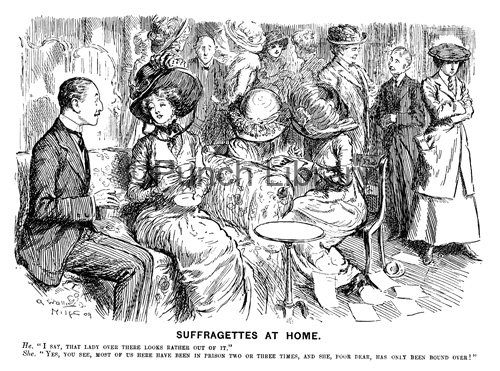
Granted, I didn't lift up there skirts and check (as if any of them wear skirts...ha), though that surely would have been my prerogative in 1955 or the 1800s or whenever we're locating that fictionalized era when women were actively, systematically, and universally oppressed by men. Nevertheless, it seems clear that what we have here is a bunch of women sitting around in a closed off group trying to decide whether or not and how men are trying to oppress women and failing as men. Go figure.

Speaking on behalf of the testicled among us, or at least as one male among many, you women are welcome to continue to ascend in the workforce. Most of my colleagues are already women, as are most of my immediate supervisors. Continue to dominate academics. Be ever more consciously aggressive, more coldly rational, more unreservedly sexual, more delightfully vulgar because, after all, men have gotten away with it for years and anything we can do, you can do better. Earn equal pay for equal work, and, for the sake of reparations, reverse the pay gap for a while just to teach us a lesson. You have my permission, which you neither need nor want and which is undoubtedly a mere vestige of a paternalistic cultural heritage passed unconsciously to me by my forefathers (<--term deliberately not gender inclusive). Meanwhile, all I ask for is the simple right to find those qualities unattractive. If the idea of my home becoming a staging ground for working out gender equality doesn't comport with the notions of domestic bliss that I developed when I was a little boy playing house and you were a little girl playing sister suffragette, I trust you won't think me too primitive. While you are off pursuing your dreams, I ask only that you don't count among your goals the wholesale destruction of my dream of enjoying a wife who makes me feel like a man, the sort of man Nick Charles was in the 1930s with his young, rich, opinionated, strong-willed wife who adored him. I have never, nor would I ever, force a woman to do anything, but you'll forgive me if I don't buy into the newest, shiniest model of woman just because you're telling me she's the wave of the future. The old model works just fine, the kind who recognizes that the quests for love and equity are sometimes adversarial.

So you can scoff if you want and hurl petty insults at Suzanne Venker, but--personally, anecdotally--there seems to be more than a little truth in the argument that men aren't interested in competing all day at work and coming home to find domestic competition hovering just beneath the surface. What do you care? You don't want men like me anyway, and the men you do want don't want women like Suzanne Venker or Phyllis Schafly anyway--you know, the publicly outspoken, well-educated, career women that feminists are trying to get rid of.

If we're lucky, men will go on blaming the demise of marital tranquility on women; women will persistently nag men to change with the times and lament the failures of the brutish sex when empowered women can't find husbands; and before it's all over, maybe the world won't collapse under the wait of its own mushrooming population.

Wednesday, November 28, 2012

Hating Francis Asbury

I love the Methodists. During the wild, rebellious days of my collegiate youth, on any given Sunday you might find me in an early morning service rocking out to the praise band and defiantly not taking weekly communion. More to the point, I enjoy Methodist history. It functions as a powerful corrective when I am tempted to overstress the peculiarities of the Stone-Campbell Movement. The history of Methodism in America provides an important precursor and parallel to my work in the Churches of Christ in the South. I include that disclaimer only because when I vocalized the following criticisms to a colleague, he immediately assumed "Oh, you must not like the Methodists" (drawing on a comment I had previously made about abhorring Puritan history). That is not the case at all. When I first cracked the spine of John Wigger's American Saint: Francis Asbury and the Methodists it was with joyful anticipation. When I finally retired the last page, I had nothing left but bitter disappointment.

Wigger's recent and expansive (not to mention expensive) critical biography of Francis Asbury, the patriarch of American Methodism, fills a void. Or so I hear. My experience, however, tells me that there are quite enough rambling, distracted, self-indulgent works in the broad field of history to satisfy even the most committed masochist. Wigger may treat a new subject, but it is in the same tried and true unreadable style. The work suffers from that most basic error of misplaced purpose, a fact which becomes abundantly clear even before the introduction is completed. The reader gets a vague sense that Wigger intends to rehabilitate Asbury from generations who have seen him as nothing more than a power-hungry autocrat. Yet even to understand this theoretically governing thesis requires wading through more than four hundred pages of largely unrelated travel accounts, and even so, I am not confident that this or any guiding purpose can be asserted with any force.

Wigger aims at a truly comprehensive biography, by which I mean everything imaginable short of the regularity of Asbury's bowel movements--a detail I fear was omitted because Wigger could not find adequate source material on the subject. Yet he does not stop there but complicates the narrative by inserting dozens of miniature biographies of every passing acquaintance in Asbury's life. Or in the lives of Asbury's passing acquaintances. Or...well you get the picture. To these are added tangents about the four kinds of malaria and other trivialities until the volume becomes bloated to the point of rupture. The final straw comes in the conclusion as part of a discussion of past biographies of Asbury. It is here that Wigger derisively comments, "One has to admire the audacity of an author who, when faced with a lull in his narrative, simply makes something up, the more outrageous the better." I would recommend to Wigger that, on page 416 of an unusually dry and meandering text, he not be so condescending about authors who care whether or not their audience is awake.

Still, Wigger's work is more than just undirected, unmanageable, and unreadable. Those are claims that could be made about countless "good" works of history. Wigger does further violence to his subject by pulling Asbury off his horse and forcing him onto the therapist's couch. In playing Freud, Wigger returns frequently and unconvincingly to the "significant" relationship between the distant Asbury and his supposedly overbearing mother. Never mind that Wigger never produces any evidence of such a relationship. He is not even bothered to cite directly contradictory evidence immediately after his claims. He is convinced that the relationship exists and is determinative, the evidence be damned. The psychoanalysis does not stop there, either. He speculates about Asbury's relationship to social elites in boyhood, about the sources of his father's drunkenness, and about the effect of the childhood death of his sister on Asbury's love life. The cumulative effect is to make the reader long for the days when the incompetent historian merely portrayed Asbury as an autocrat.

At the end, I was duly convinced that Asbury was no tyrant. I was more profoundly convinced that Wigger is an intellectual sadist. I realize, of course, that this is something distinct from the normally restrained reviews I prefer to offer here, and, moreover, that it runs contrary to the accolades of the proud few who make a living congratulating one another on the sheer volume of their publications. Nevertheless, I felt it my sacred duty to warn people that there is a menace on the loose, and he appears as an unassuming itinerant on a horse. But don't be deceived. Boredom can kill.

Monday, November 26, 2012

The Wisdom of Everett Colby

If you haven't heard of Everett Colby, you shouldn't feel bad. He's not important. Unless you happened to stumble across his comically brief Wikipedia entry or, as I did, a stray piece of folksy wisdom in the New York Times, there is no reason to remember the late New Jersey state senator. Nevertheless, I invite you to consider the simple profundity of the following from 1927:

Everett Colby sums up the weary lesson the world has been studying since 1914. Says he, "No one wins wars, so why not have peace?"


That is all the article had to say about war or about Everett Colby, but in many respects that seems like all that needs to be said.

Thursday, November 22, 2012

A Thanksgiving Resolution

It turns out, I couldn't help myself. I felt compelled to share some small, interesting quote. Here are the thoughts of the editor of the Chicago Daily Tribune for Thanksgiving, 1880:

So there should be abundant good cheer and joy to-day as the reunited families once more come together around the festive board, converging from distant points and for one day forgetting the cares and anxieties of the world int he renewal of old associations and the coming closer together by reason of those who may have dropped out of the circle. It makes better men and women of us all, for blood after all is thicker than water, and the influences of home are stronger and safer than those of the world. And if from the open door of the home some ray of light should stream out sufficiently to illuminate and cheer some other home less happy in its appointments and less fortunate in this world's goods, then would each one's Thanksgiving be crowned with a most grateful benediction.

It's a sweetly worded sentiment, encouraging in its broad contours, but I wonder how self-deceptive it is to assume that those less fortunate than yourself will be cheered simply by seeing how happy you are. Let me propose an alternative, perhaps in better keeping with the way we should interpret blessings from God. This Thanksgiving make an effort, however, small to not only be thankful for what you have received but to give someone else cause to be grateful to God for you.

Wednesday, November 21, 2012

Thanksgiving Eve

In the proud tradition of offering thoughtful historical quotes, the following--from the November 26, 1857 edition of the Chicago Daily Tribune--is presented for your consideration:

No paper will be issued from this office tomorrow--Thanksgiving Day.


Monday, November 19, 2012

The Following is Rated M for Mature

Penile mutilation is chief among a collection of topics that I am not interested in discussing, hearing about, or reading about. (And lest a charge of sexism be leveled against me, the details of female circumcision are right there with it.) It certainly was not something I expected to find discussed at great length in Anthony Reid's Southeast Asia in the Age of Commerce. Yet, right in the heart of this Braudelian examination of the "land below the winds," Reid managed to work in an extensive and graphic discussion of grotesque penis surgeries that were enough to make my...stomach turn. Reid sees these surgeries as evidence of the inverted sexual power dynamic between the sexes in Southeast Asia society, a point which is proved as soon as the reader asks, "Why else would a man do that to his genitals?" In the interest of keeping myself well within the bounds of fair use, I have omitted much of Reid's account and encourage you to read it (beginning on page 148) if you find your appetite whetted by the following description:

The most draconian surgery was the insertion of a metal pin, complemented by a variety of wheels, spurs, or studs, in the central and southern Philippines and parts of Borneo. Pigafetta was the first of the astonished Europeans to describe the practice:

"The males, large and small, have their penis pierced from one side to the other near the head with a gold or tin bolt as large as a goose quill. In both ends of the same bolt some have what resembles a spur, with points upon the ends; others are like the head of a cart nail. I very often asked many, both old and young, to see their penis, because I could not credit it. In the middle of the bolt is a hole, through which they urinate...They say their women wish it so, and that if they did otherwise they would not have communication with them. When the men wish to have communication with their women, the latter themselves take the penis not in the regular way and commence very gently to introduce it, with the spur on top first, and then the other part. When it is inside it takes the regular position; and thus the penis always stays inside until it gets soft, for otherwise they could not pull it out."

The same phenomenon is described by many others...who agree that its purpose was always explained as enhancing sexual pleasure, especially for women. Some peoples of northwest Borneo...continued this practice until modern times, and their oral tradition attributes its origins to a legendary woman who found sexual intercourse without such an aid less satisfying than masturbation.

The same result was obtained in other parts of Southeast Asia by the less painful but probably more delicate operation of inserting small balls or bells under the loose skin of the penis..."they open [the penis] up and insert a dozen tin beads inside the skin; they close it up and protect it with medicinal herbs...the beads look like a cluster of grapes...They make a tinkling sound, and this is regarded as beautiful."

So, gentleman, the next time your wives make some seemingly onerous request regarding their sexual satisfaction, comfort yourself in the knowledge that at least they aren't asking you to nail a spur into your penis or embed a cluster of grapes under the skin.

Saturday, November 17, 2012

Amusing Notes from the Past

In doing some research recently on the contemporary reception of Sinclair Lewis's Elmer Gantry, I stumbled upon an interesting recurring page in the New York Times called "Footnotes on Headlines." It's unfortunate, really, that I don't have a better grasp on the history of the period--I admit a principled disinterest in anything that happened between World War I and the 2011 Missoula Cow-a-bunga competition--because, if I did, I imagine the humorous snippets would be even funnier. Here are just a couple from 1927 that very little advanced historical knowledge is needed to enjoy:

Bert Acosta and Clarence Chamberlin demonstrate that they can stay up in the air about as long as any pair of filibustering Senators in these United States.

The Balkans again. Italy shrieks that Yugoslavia is starting a war against Albania. Yugoslavia shouts that Italy schemes to use Albania as a catspaw in seizing control of the Adriatic. France, England and Germany turn those hose on them all. It is felt in the world that the Balkans should be seen, not heard, for a change.

High-heeled shoes continue their health-wrecking course in the world, despite the wholesome warnings periodically broadcast by the medical professionals and this public-spirited department. The latest victim is General Primo de Rivera, who slipped on the polished floor of his palatial office and lit on his head. When will our dictators, military and otherwise, get a little sense about footwear, we ask in despondent tones.

In forty-two years of public service, Dr. William H. Guilfoy, Registrar of records in the Department of Health, has seen smallpox, cholera and typhus almost eliminated as causes of death in New York City, and the death rate from typhoid fever and diphtheria reduced to a small fraction of its old proportions. The automobile epidemic has, of course, come in to rage in our midst. There is always something.

There are countless others, of course, and assuredly more in years beyond 1927. Perhaps, time permitting, I may rummage through them and share some more.