[…], by far the greatest anatomist of the age, used to say that he could distinguish in the darkest room by one stroke of the scalpel the brain of the inebriate from that of a person who lived soberly. Now and then he could congratulate his class upon the possession of a drunkard’s brain, admirably fitted from its hardness and more completed preservation for the purpose of demonstration. When the anatomist wishes to preserve a human brain for any length of time, he effects that object by keeping that organ in a vessel of alcohol. From a soft pulpy substance , it then becomes comparatively hard, but the inebriate, anticipating the anatomist, begins the indurating process before death, begins it while the brain remains the consecrated temple of the soul while, while its delicate and gossamer-like tissues still throb with the pulse of heaven-born life. Strange infatuation this, to desecrate the God-like. Terrible enchantment that dries up all the fountains of generous feelings, petrifies all the tender humanities and sweet charities of life, leaving only a brain of lead and a heart of stone.
Tuesday, June 18, 2013
Some Standard Wisdom on Brain Pickling
One of the recurrent themes in the articles that caught my eye while reading through the 1880 editions of the Christian Standard was the confidence with which they trumpeted the scientific knowledge of their day. Looking at the science of a bygone era, in edition to being tremendously amusing, ought to give us pause today about our own scientific hubris and force us to wonder how future generations will perceive our cutting-edge thought, particularly as it filters down to the popular level. This piece was copied by the Standard from Scientific American, which is still in publication.


Tuesday, June 11, 2013
Some Standard Wisdom on Ministers' Wives
After a couple of weeks of more serious excerpts, it is time to return to more lighthearted fare. This offering, entitled "The Minister's Wife" was intended, almost certainly, as a sarcastic critique of the unrealistic expectation that congregations had for the spouses of their leaders. Still, I can't help but read it and think that, hovering just beneath the surface, is an genuine wish.
The minister’s wife ought to be selected by a committee of the church. She should be warranted never to have a headache, or neuralgia; she should have nerves of iron; she should never be tired or sleepy, and should be everybody’s cheerful drudge; she should be cheerful, intellectual, pious, domesticated; she should keep her husband’s house, darn his stockings, make his shirts, cook his dinner, light his fire, and copy his sermons; she should keep up the style of a lady on the wages of a day-laborer, and be always at leisure for “good works,” and ready to receive morning calls; she should be secretary to the Band of Hope, Dorcas Society, and the Home Mission; she should conduct Bible classes and mothers’ meetings; should make clothes for the poor and gruel for the sick; and finally she should be pleased with everybody and everything, and desire no reward beyond the satisfaction of having done her own duty and other people’s too.
Friday, June 7, 2013
Thinking Lincoln
 Abraham Lincoln has always loomed large in the American consciousness, as martyr president's have a tendency to do. Interest has peaked in recent years, however, with a number of major insertions of Lincoln into the popular culture. Bill O'Reilly's best selling book stands out, as does the Oscar-winning Spielberg film Lincoln. Better than both of those, as far as I'm concerned, is the highly plausible revisionist history film, Abraham Lincoln: Vampire Hunter. In each case, and throughout history, there has been a tendency to glorify the dead president, a pull that even historians have trouble resisting. While there is no need to disparage Lincoln, contrary voices needed to be heard and praise needs to be qualified by critical analysis. Consider, for example, the following quote from the New York Evangelist written in the midst of Lincoln's first term:
A year and a half of very difficult administration has shown our President to be a plain, good man, honest in heart, pure in intention, but certainly not those rare geniuses, who are born to “ride in the whirlwind and direct the storm.” We have taken a plain country lawyer out of his village and placed him at the head of the Government, and imagined him to be a great man, and because he does not quite measure to the character, we're ready to censure and complain. Might we not rather reprove ourselves for our unreasonable expectations?
Here we have a laudatory account of the "good," "honest," and "pure" president from a friendly source, but consider how great a leap it is for the mind in 2013 to transport into a context in which Lincoln would need to be defended against detractors not by stressing his monumental works but by emphasizing his mediocrity. We should not be so enamored for Lincoln that we forget that even his friends did not perceive him to be one of "those rare geniuses," a status he would assume indelibly after his death.
Tuesday, June 4, 2013
Some Standard Wisdom on Invisible Gas
This weeks thought from the Christian Standard was borrowed from the New York Evangelist and, like last week, illustrates just how little things have changed, if not in the way Christianity is actually treated by society than at least how Christian perceive their relationship to the broader culture.
Invisible Christianity seems to be a favorite doctrine with many people. The doctrine, it would appear, is this: that you may be saved and nobody know of it. You may get to heaven nicely without any “ado”—so quietly, in short, that nobody will suspect where you are going. Such is a fair statement of the doctrine so many people like. By all means get to heaven, they say, but don’t alarm anybody about it. Keep it all to yourself—the quieter you go to heaven the better. This is the doctrine of invisible Christianity.
I wonder what the world would think if some man told them he had invented invisible gas? Why, they would say the man’s mad—the very thing gas is for is to give light; it must be visible. And, strange to tell, this is just what God says of the Christians—that is, of the soul that’s saved. “Ye are the light of the world,” He says. What could be plainer? But is the light to be seen? Hear what God says, “A City that is set on a hill can not be hid” (Matt. V. 14). “Can not be hid.” That’s what God says about the man or woman that’s saved. Invisible Christianity is not in the Bible. Quite the opposite. If you are saved, your light will be easily seen by the world as a city built on a hill.
Tuesday, May 28, 2013
Some Standard Wisdom on Asceticism
We pick back up our quotes series from the 1880 Christian Standard with some thoughts on asceticism, which appeared to have the same negative connotation in nineteenth century American Protestantism that it has today.
Too much is said in these days against “asceticism,” but the danger of the Church does not lie in that direction. […] in cloaks are more in vogue than “hair shirts.” Daily food is a lawful indulgence. But fasting is sometimes profitable to both body and soul. Many luxuries of domestic life are lawful in themselves; to give them up in order to have more money for benevolent uses, or in order to discourage social extravagances, is a dictate of pure Christianity. John Wesley had a right to own silver plate, yet he nobly refused to possess more than two or three silver spoons “while so many poor people were lacking bread.” An excellent man in my congregation sold his carriage just as soon as he found that his horses were eating up his charity fund too fast. My friend is no ascetic. He is a very sensible and sun-shiny Christian. If the same spirit which actuated him were more common in the church, there would be fewer luxurious equipages, fewer wine bottles, fewer card tables, fewer sumptuous evening parties; but there would be more missionaries in the West, and more Bibles in China and Japan. Self-denial soars above them.
Tuesday, May 21, 2013
Feast of Franz
Today we take a break from our regularly scheduled wisdom from the Christian Standard in order to observe the feast day of Franz Jägerstätter. Not on your calendar? Perhaps it should be. Jägerstätter was a German Catholic who refused to take up arms during World War II. He offered himself for non-combatant service, but the Nazis cared even less for conscientious objection during the nationalistic global wars than Americans did. Instead of allowing him to work as a military paramedic, the Nazis sentenced him to execution by guillotine. On the day of his death, he penned these words:
His story would remain largely untold, until academics uncovered him and offered him to the world. In 2007, the Roman Catholic Church recognized him formally as a martyr and beatified him, making May 21st his feast day. Jägerstätter is a reminder both of the unconquerable power of the human will invigorated by the divine and of our certain ignorance of the countless stories of brave, pious fortitude that might inspire us if only we knew the half of them.
If I must write... with my hands in chains, I find that much better than if my will were in chains. Neither prison nor chains nor sentence of death can rob a man of the Faith and his free will. God gives so much strength that it is possible to bear any suffering.
His story would remain largely untold, until academics uncovered him and offered him to the world. In 2007, the Roman Catholic Church recognized him formally as a martyr and beatified him, making May 21st his feast day. Jägerstätter is a reminder both of the unconquerable power of the human will invigorated by the divine and of our certain ignorance of the countless stories of brave, pious fortitude that might inspire us if only we knew the half of them.
Friday, May 17, 2013
Creation vs. Evolution vs. Catholicism
The Barna Group, commissioned by BioLogos, has just released an intriguing new study about sharp divides among "today's pastors" about science, faith, and the origin of species. The study shows an almost even split between those who believe in Young Earth Creation and those who do not, with the do not group being divided between proponents of theistic evolution and progressive creationism. Young Earth Creationists have their stronghold in the South, while theistic evolution is most common in the Midwest. Most clergy think that questions of faith and science are important, but, at the same time, a majority fear that disagreements are distracting from the greater Christian witness.
There is little there to shock, unless you realize one glaring omission: Catholics. While the survey of Protestant ministers actually excludes both Orthodox and Catholic leaders, the Orthodox have only about one million members in the United States, making their omission excusable (at least from a statistician's point of view). Catholics, on the other hand, are no minority to be trifled at. As the largest single Christian denomination in the United States--one in four Americans belongs to the Roman Catholic Church--their absence from a survey about the origins of life suggests an array of possible biases, all of them disturbing. It is likely that, in lockstep with history, that Catholics are still being treated as second class Christians or (perhaps implicitly) not real Christians at all. It would not be the first time the self-proclaimed Protestant establishment drew a sharp line between Christianity and papism--even if it can no longer express the dichotomy in those terms in our politically correct age. Equally possible, Catholics may have been excluded because their presumed answers would have tipped the scale away from a picture of conflict between conservative and progressive thought on origins. The Roman Catholic Church never engaged in the kind of systematic anti-evolution campaigns that so many Protestants did at the turn of the twentieth century in response to Darwin. In fact, for more than sixty years the official Catholics position has been that there is no conflict between evolution and Christianity, leading to a de facto triumph of theistic evolution among leading Catholic divines. Admitting Catholics into the dialogue would throw off both the slim majority of Young Earth Creationists and the geography of creationism (with the South and Southwest being an area of significant Catholic presence).
Or maybe the Barna Group just never thought to include Catholics. But would that really be better?
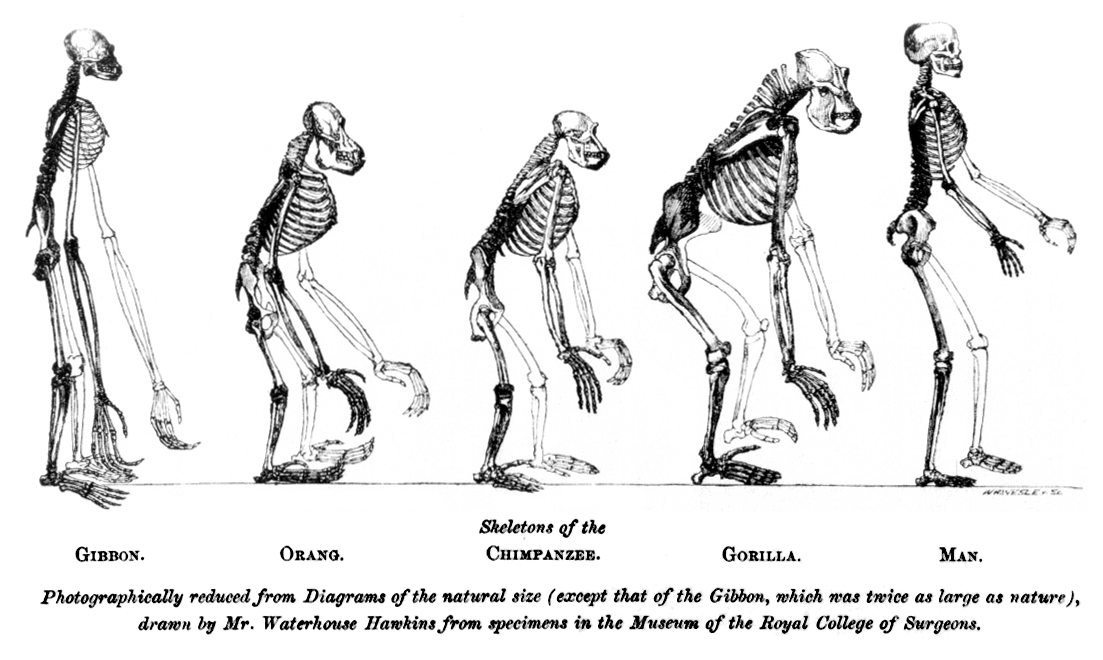
There is little there to shock, unless you realize one glaring omission: Catholics. While the survey of Protestant ministers actually excludes both Orthodox and Catholic leaders, the Orthodox have only about one million members in the United States, making their omission excusable (at least from a statistician's point of view). Catholics, on the other hand, are no minority to be trifled at. As the largest single Christian denomination in the United States--one in four Americans belongs to the Roman Catholic Church--their absence from a survey about the origins of life suggests an array of possible biases, all of them disturbing. It is likely that, in lockstep with history, that Catholics are still being treated as second class Christians or (perhaps implicitly) not real Christians at all. It would not be the first time the self-proclaimed Protestant establishment drew a sharp line between Christianity and papism--even if it can no longer express the dichotomy in those terms in our politically correct age. Equally possible, Catholics may have been excluded because their presumed answers would have tipped the scale away from a picture of conflict between conservative and progressive thought on origins. The Roman Catholic Church never engaged in the kind of systematic anti-evolution campaigns that so many Protestants did at the turn of the twentieth century in response to Darwin. In fact, for more than sixty years the official Catholics position has been that there is no conflict between evolution and Christianity, leading to a de facto triumph of theistic evolution among leading Catholic divines. Admitting Catholics into the dialogue would throw off both the slim majority of Young Earth Creationists and the geography of creationism (with the South and Southwest being an area of significant Catholic presence).
Or maybe the Barna Group just never thought to include Catholics. But would that really be better?
Tuesday, May 14, 2013
Some Standard Wisdom for Managing Canals
In 1880, long before the canal would come to fruition but while it was certainly in the minds of many, the Christian Standard came out in favor of the Panama Canal. At the time, the French were preparing to build a canal, and in fact would make an expensive and deadly attempt at it in the following decade. The Christian Standard was very much opposed to this, for reasons that display the editors' profound naivete and almost criminal patriotism.
Funny. I always thought it was people, not commerce, that suffered in war.
It is nevertheless clear that the United States government, the only considerable government in the world, not committed to the war policy should guard this great highway of nations. Every such international work, however, is a great preserver of peace. The greater the interest of each nation in all other nations, the greater the interest of that nation in the preservation of peace. And there is no work in which all civilized nations would have a greater interest than in this canal. It is commerce that rules the world now, and it is commerce that always suffers in war. Therefore we may assume that a work in which the commerce of the world is directly concerned will diminish the possibilities of war. Let it be in the hands of a nation whose policy is peace, and no limit need be put on its influence on the affairs of men.
Funny. I always thought it was people, not commerce, that suffered in war.
Tuesday, May 7, 2013
Some Standard Wisdom of Hiring Help
Continuing with the amusing theme of anti-Irish racism picked up in the Deseret News, this week's tidbit from the Christian Standard has it all: racial, class, and religious chauvinism.
The world has changed so much. Whereas once Americans advocated switching to Chinese domestic labor, now Americans are content to let the Chinese stay in their own country and do American labor (all the while, of course, complaining that no labor is domestic anymore).
The people who need house servants find the Chinese more serviceable than any others they employ, and they have relieved them from the tyranny of the Irish girls. Mr. James Redpath says, “The real secret of this outcry against the Chinese is that the Catholic Church can no longer levy a tax on every Protestant family on $5 a month, which used to be added to the Irish girl’s wages; and the Irish girls openly avow it.”
The world has changed so much. Whereas once Americans advocated switching to Chinese domestic labor, now Americans are content to let the Chinese stay in their own country and do American labor (all the while, of course, complaining that no labor is domestic anymore).
Monday, May 6, 2013
Good Ol' Fashioned Racist Humor
Reports the Deseret News, December 26, 1855:
Those Irishmen. Scamps, every last one of them.
An Irishman, on arriving in America, took a fancy to the Yankee girls and wrote to his wife as follows: "Dear Norah--These few lines are to inform you that I died yesterday and I hope you are enjoying the same blessing. I recommend you to marry Jemmy O'Rourke, and take good care of the children. From your affectionate husband till death."
Those Irishmen. Scamps, every last one of them.
Sunday, May 5, 2013
Rejoicing on Pascha
Hallelujah! Christ is risen!
I love Easter. I love it more when the Christian community, East and West, by delightful coincidence happens to be celebrating it on the same day, but on years like this, when they don't, I do my best to look at the silver lining: I get twice as many resurrected Christs. My intent had been to share another passage from John of Sinai today, but he has nothing very pleasant to say about Easter.
Well, I'm not a warrior monk, and I left my mourning on Great and Holy Saturday where it belongs. I suppose there is a reason why John of Sinai is standard Lenten reading for the Orthodox and not standard Easter reading. Though I admit the possibility that this is duplicitous of me, and I'm sure John of Sinai would accuse me of just that, but I'd like to think that I can think both of the physical feast and of the spiritual feast afforded by the resurrection. In fact, I rather like to believe that the two are related. With sacramental flavor, the feasts of holy days are intended to make tangible to our bodies and minds--more accustomed and attuned to the immediacy of physical stimuli than spiritual ones--the great joy which we have received from God. Today being the remembrance of that consummate joy of Christian existence, I intend to make that as holistic an experience as possible, letting my body partake of the joy of my heart, and vice versa. I can only hope that God consecrates that effort rather, and I don't run headlong into gluttony and dissipation.
On that note, happy Easter everyone (even those of you who thought Easter was more than a month ago).
I love Easter. I love it more when the Christian community, East and West, by delightful coincidence happens to be celebrating it on the same day, but on years like this, when they don't, I do my best to look at the silver lining: I get twice as many resurrected Christs. My intent had been to share another passage from John of Sinai today, but he has nothing very pleasant to say about Easter.
The gluttonous monk...counts the days to Easter, and for days in advance he gets the food ready. The slave of his belly ponders the menu with which to celebrate the feast. The servant of God, however, thinks of the graces that may enrich him.
Joy and consolation descend on the perfect when they reach the state of complete detachment. The warrior monk enjoys the heat of battle, but the slave of passion revels in the celebrations of Easter. In his heart, the glutton dreams only of food and provisions whereas all who have the gift of mourning think only of judgment and of punishment.
Well, I'm not a warrior monk, and I left my mourning on Great and Holy Saturday where it belongs. I suppose there is a reason why John of Sinai is standard Lenten reading for the Orthodox and not standard Easter reading. Though I admit the possibility that this is duplicitous of me, and I'm sure John of Sinai would accuse me of just that, but I'd like to think that I can think both of the physical feast and of the spiritual feast afforded by the resurrection. In fact, I rather like to believe that the two are related. With sacramental flavor, the feasts of holy days are intended to make tangible to our bodies and minds--more accustomed and attuned to the immediacy of physical stimuli than spiritual ones--the great joy which we have received from God. Today being the remembrance of that consummate joy of Christian existence, I intend to make that as holistic an experience as possible, letting my body partake of the joy of my heart, and vice versa. I can only hope that God consecrates that effort rather, and I don't run headlong into gluttony and dissipation.
On that note, happy Easter everyone (even those of you who thought Easter was more than a month ago).
Saturday, May 4, 2013
Mourning on Great and Holy Saturday
Today Jesus is in the tomb and the Orthodox Christians around the world are mourning the savior. But this mourning cannot help but anticipate it relief, as the Paschal feast is within sight and the Lord is eager to spring from the tomb, resurrected, triumphant, and regnant forever. It is because of this that John of Sinai can speak of sorrow the way that he does.
Groans and sadness cry out to the Lord, trembling tears intercede for us, and the tears shed out of all-holy love show that our prayer has been accepted...Hold fast to the blessed and joyful sorrow...and do not cease laboring for it until it lefts you high above the things of the world to present you, a cleansed offering, to Christ.
Friday, May 3, 2013
Contemplating Death on Great and Holy Friday
Today Christians in the Orthodox world are recalling the crucifixion of Christ, perhaps the most famous death in human history and, if our testimony is to be believed, the most important one as well. Christ death is itself a victory over death, which has a rightful claim on all humanity except the undefiled Christ. With his death, Jesus has sapped death of all its finality, taken from death its sting. It is a truth which warrants endless rejoicing, but just as the victory over death was not complete until the resurrection and our freedom over death not complete until the eschatological future, so today is not a day for the ruminating on victory but for contemplating death. John of Sinai believes that the remembrance of death is a necessary product of our sins, but he also insists that it is a spiritual virtue if rightly practiced.
Remembering that humanity must still die keeps our sins in the forefront of our mind standing in judgment of our behavior now so that they will not stand so before the Lord in the last days. Considering our own deaths also reminds us of the inadequacy of them when compared to the atoning death of Christ, for "the day is not long enough to allow you to repay in full its debts to the Lord."
As thought comes before speech, so the remembrance of death and sin comes before weeping and mourning...To be reminded of death each day is to die each day; to remember one's departure from life is to provoke tears by the hour...Just as bread is the most necessary of all foods, so the thought of death is the most essential of all works. The remembrance of death brings labors and meditations, or rather, the sweetness of dishonor to those living in community...Just as some declare that the abyss is infinite, for they call it the bottomless pit, so the thought of death is limitless and brings with it chastity and activity.
Someone has said that you cannot pass a day devoutly unless you think of it as your last.
Remembering that humanity must still die keeps our sins in the forefront of our mind standing in judgment of our behavior now so that they will not stand so before the Lord in the last days. Considering our own deaths also reminds us of the inadequacy of them when compared to the atoning death of Christ, for "the day is not long enough to allow you to repay in full its debts to the Lord."
Thursday, May 2, 2013
Learning Humility on Great and Holy Thursday
After a couple excellent years of sharing the date of Easter (Pascha) and one year of reasonably close proximity, the holiest day in Christianity is once again being celebrated at completely different times by Catholics and Protestants, on the one hand, and the Orthodox, on the other. While for most Americans, Maundy Thursday is just a distant March memory (if it's remember at all), but today is Great and Holy Thursday in the Orthodox Church, the day when, like their Western counterparts, the Orthodox remember the washing of the disciples feet and the last supper on the night when Jesus was betrayed. Both these events--the radical servanthood of Jesus and the betrayal of the Christ for material gain--ought to inspire in us an enduring sense of humility. Humility, unfortunately, has a bitter taste to Christians, being one of those virtues which we know we ought to have but we never really aspire for because its no fun and (unsurprisingly) garners us little praise. John of Sinai, standard reading for the Orthodox during the Lenten season, views humility differently.
Humility, after all, is only the rejection of false blessings in favor of real blessings, divine blessing of eternal import. To eschew earthly praise is only to suggest that we prefer the praise of God our Father to that of the devil our enemy. It is this humility which Jesus embraced in kneeling before his disciples, and this humility which Judas rejected in turning Jesus over to be crucified.
As soon as the cluster of holy humility begins to flower within us, we come, after hard work, to hate all earthly praise and glory. WE rid ourselves of rage and fury; and the more this queen of virtues spreads within our souls through spiritual growth, the more we begin to regard all our good deeds as of no consequence, in fact as loathsome...We have risked so far a few words of a philosophical kind regarding the blossoming and the growth of this everblooming fruit. But those of you who are close to the Lord Himself must find out from Him what the perfect reward is of this holy virtue, since there is no way of measuring the sheer abundance of such blessed wealth, nor words nor could word convey its quality.
Humility, after all, is only the rejection of false blessings in favor of real blessings, divine blessing of eternal import. To eschew earthly praise is only to suggest that we prefer the praise of God our Father to that of the devil our enemy. It is this humility which Jesus embraced in kneeling before his disciples, and this humility which Judas rejected in turning Jesus over to be crucified.
Tuesday, April 30, 2013
Some Standard Wisdom for the Proactive Church Lady
Having highlighted the seedier side of Stone-Campbell views on the prospects and methods for evangelizing the newly freed slaves, let us turn now to a more egalitarian note. This comes from the Querists' Drawer where Errett and his editorial staff answered questions on belief and practice sent in by readers. Here Errett comes to the defense of some women fed up with their unmotivated fellow congregants.
“We met today for social worship and the elder no being present, the deacon and the brethren would not lead in worship; the sisters went ahead and had singing, prayer and Bible reading. Did we do right? Would it have been right for a sister to have led in the breaking bread?”
In our judgment, you did just right. And if you had added the Lord ’s supper to observances, we should still say you did right. If a company of sisters in a neighborhood in which no brethren lived were to assemble for reading and prayer, what would there be to hinder their observance of the Lord’s supper? And if brethren are present and refuse to lead in the worship, no one can charge that the women usurp authority over them, if they go forward in the performance of duties from which the men shrink. Certainly, such men should never complain because the women outstrip them in zeal and faithfulness.
Friday, April 26, 2013
It's an Arbor Day Miracle: A History of the Tennessee Badlands
 |
| Image by UNC Press |
The Ducktown Basin, Maysilles explains, was a geography that cried out for disaster. The rich copper deposits right on the surface were too tempting for miners to ignore. Transportation deficiencies made the raw materials too expensive to transport off site to smelt. The sulfur content of the rocks was unusually high, creating unusually toxic smelting smoke. The geography of the basin was such that the smoke, once in the air, could not escape and dissipate into the atmosphere. The moist climate of the temperate rainforest meant that the chemicals were constantly being delivered back into the the soil in the form of toxic rain. The resulting concentration of chemicals in the air and water stripped the soil, killed the trees, and launched a legal battle between the state of Georgia and the mining companies that made it all the way to the Supreme Court on multiple occasions.
Intrigued as I was by this untold story and fortunate enough to be going to east Tennessee for a visit, I took the opportunity to drive down to Ducktown and see what remained of the infamous badlands created through ignorance, negligence, and geographical misfortune. The answer: very little. At the Ducktown museum, which commemorates both the mine and the unusual topography it created, the woman behind the desk took me with pride to a satellite photo of the region from some decades ago. She recalled with pride, "The only two man made things you could see from space were the Great Wall of China and the Tennessee Badlands." The nostalgia poured out of her as she remembered a time when, stripped of all flora and fauna, she need not worry about snakes or mosquitoes like her neighbors outside the basin in the lush Tennessee mountain forests. "It's too bad," she told me, "because we just look like everyone else now." Maysilles tells a different story, one of workers who had to have separate car for work and everything else because just by driving into the basin the air would begin to peel away the paint. He shares, perhaps for the first time for modern eyes, the stories of small subsistence farmers who had their land stripped of its fertility and, when they protested, found themselves fired from the mines where they worked to supplement their income. He tells of a single woman who spent years in court seeking damages from the mining companies and won, only to have her settlement reduced to one dollar on appeal. Memory is truly a curious phenomenon, and it is difficult to sort out whose story should take precedence: Maysilles, the outside critic, or the woman at the museum who grew up in Ducktown and whose husband was a mine worker.
In any case, the story does not linger in the confusing days of the Tennessee Badlands. Cooperative ventures by the government and the various industries who have controlled the mining companies over the years have struggled to make the basin green again. These herculean efforts to reforest have been largely rewarded, though not immediately and not without struggle and expense. Driving over the crest and into the basin, we noticed no difference between the forests without and the forests within. The Ducktown Basin is teeming with life again, even snakes and mosquitoes. As the reforestation began to take hold, many in the basin, I suspect the woman at the museum among them, lobbied to have a piece of the badlands preserved as a memorial. It was actually this memorial that I had traveled out to see, a relic of the way the basin had looked when it was an environmental catastrophe and a tourist attraction. Here then, is the arbor day miracle. The reclamation efforts have been so successful, life so insistent on reclaiming the dead basin, that it is a struggle to keep the last little bit of badlands in its pristine, unnatural state. Here it is, as it appeared at the time of my visit, trying to fight off the invasion of trees, but failing so completely that the little saplings are springing up even in the steep slope that terminates in a flooded mineshaft:

Maysilles has given the curious and patient reader a wonderful glimpse into a largely ignored subject. His interest is primarily in the way the legal battle continues to be cited in major environmental cases today. Mine was in the hidden treasure that had been in my backyard all the years I lived in Tennessee but that I had never known about until I left. A law student told me recently that she loved the way Maysilles had made obscure legal principles comprehensible, in ways that even her text books couldn't. Whatever it may be, if something about Ducktown has peaked your curiosity, I highly encourage picking up this book. I also wholeheartedly recommend that anyone in the region make a journey down to Ducktown to explore. The drive is beautiful (no matter what direction you come from), the community is quaint, and the history is engaging.
And if you should stop in and see the precious little old woman at the museum desk, tell her you read about her online and that there are still people fascinated by her community, even if they "just look like everyone else now."
Tuesday, April 23, 2013
Some Standard Wisdom for Converting Blacks
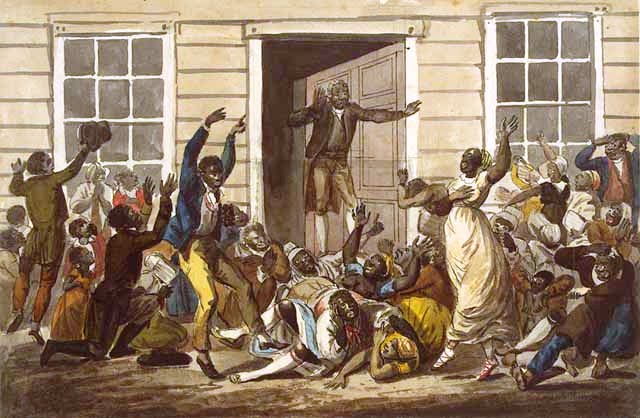 Less than a month into this series, I already feel the need to sound the reminder that in quoting some of these articles, my intent is not to endorse or make light of or even to stand in judgment of some of the darker sides of late nineteenth century thought. This warrants particular restatement with the following article by J. W. Crenshaw. It would be easy to read the below and assume either that my intent is racist or callous or anarchonistically judgmental. It is none of these. Instead, the following article sounds, among other things, a pair of themes that I have tried to reiterate here in various ways. The first is the need to complicate the narrative of the Civil War that we all learned in school: the North invaded the South to free the slaves and give blacks their rights. Historians have almost entirely abandoned this carefully constructed fiction, but the public still casts the Civil War in these terms, failing to see the stark racism and paternalism that dominated in the North no less than the South. The other is the sinister overtones that education often takes on in the hands of progressives. It's a message that has ongoing merit.
Even if neither of these themes were present, however, the following is important to read both for those in the Stone-Campbell Movement because it is part of our collective history the consequences of which we continue to live with in the de facto racial segregation of our churches and for Americans in general who need to be forced to read chapters of our history which serve neither to glorify US nationalism or to provide the starting point in a narrative of national redemption. What follows in "Difficulties in Christianizing the Colored Race" is precisely the shades of grey that we all need to grapple with in the formation of our historical consciousness.
As to what the future of the colored race of America is to be, socially, politically or religiously, we do not believe any one can conjecture with any degree of accuracy. Naturally superstitious and with their race prejudices to contend with, we approach them more from a sense of Christian duty than from any hope of achieving grand results. To succeed in our mission work among them we must agree upon some decided policy. If properly approached, we do not believe that there is a better missionary field in the world.
Experience has proven that we can not reach them through the preaching of white men. The colored leaders now, excepting a few, are ignorant and superstitious. In what direction, then, does hope lie? Certainly not in this shouting generation. The hope and the only hope, speaking from experience, is in the children. And when we educate a few colored men, as we have been doing for this work, we must not measure their success by converts made. The children, who are just learning to read, are the ones most benefited. Those whom we send out must be impressed with the importance of continuing to sound into the ears of the auditors that Christianity is something more than shouting the clothes off in the first part of the night, and serving Satan the balance of the night. We need to select young men of good character to educate them for this work. There are brethren among us who have the means to help build such a school as we need for this purpose. With the plain gospel plea that we have, if loving liberal hearts, could be interested in this work, in the next generation many of the difficulties that now so hinder our progress could be surmounted, and thousands of this unfortunate race could be Christianized.
Brethren, this is a question worthy of the attention of every Christian.
Sunday, April 21, 2013
The Wisdom of J. Gresham Machen
J. Gresham Machen is one of my intellectual heroes and the man at whose metaphorical feet I (like so many others) first learned Greek. Here he is on the anti-intellectualism of his fellow conservatives:
The Church is perishing to-day through the lack of thinking not through an excess of it.
Friday, April 19, 2013
In Other News
| Thanks to the DPLA, images like this are accessible to all! |
In less exciting news, the church institutional continues to disgrace itself on a variety of fronts. The Episcopal Church has won a "victory" in its civil case against itself before the Virginia Supreme Court.
The panel affirmed a lower court’s decision that the 3,000-member congregation, which voted in 2006 to leave the Episcopal Church, did not have the right to keep the sprawling property known as the Falls Church.
The Falls Church property is one of the country’s largest Episcopal churches and is a central landmark in downtown Falls Church.
The breakaway congregation, now called the Falls Church Anglican, has been worshiping in the Bishop O’Connell High School auditorium in Arlington County while it sought to overturn the Fairfax County Circuit Court decision from last year.
On Thursday, the Supreme Court affirmed that the property was rightly given to the mainline denomination but said some of the nearly $3 million in church coffers belongs to the Falls Church Anglican congregation.
I put "victory" in scare quotes because it hardly seems appropriate to call either side victorious when both have so miserably failed the basic standard of Christian charity and forbearance, applied particularly to this situation by Paul in 1 Corinthians 6. "Why not rather suffer wrong? Why not rather be defrauded?" Probably because Paul's churches never had anything like three million dollars in its "church coffers." If it did, maybe Paul wouldn't have been so quick on the draw with that "to have lawsuits at all with one another is already a defeat to you" nonsense.
The Orthodox Church global is having its own struggles. At the end of a long saga that has witnessed significantly more diligence than Catholic handling of sexual misconduct, Bishop Matthias has resigned. The head of the Chicago diocese of the Orthodox Church in America could no longer bear the odium of his sexual misconduct scandal and finally yielded to pressure from above to step down. In a deferential address--a momentary lapse from his conspiratorial theories about a liberal plot to manufacture his ouster--he expressed hope that "my stepping down will end the ordeal, allowing the diocese to move toward healing," and asked "for everyone's forgiveness for my failings, my mistakes and sins." He then graciously offered to forgive everyone else, for what is not entirely clear. Maybe he forgives the woman who misunderstood his "inappropriate words that I thought were being received as humorous." That certainly is the way this sincere apology feels: "I am sorry that my kindness and generosity to this person was viewed with suspicion and ulterior motives." Growing up, when I made apologies like that I got slapped. I suppose being stripped of your diocese is the ecclesiastical equivalent.
In Prague, a much bigger fish has been fried by a much sexier scandal. Metropolitan Krystof, the head of the Orthodox Church in the Czech Republic and Slovakia, has stepped down after scandal broke about his lascivious life. The prelate is alleged to have had an affair with the wife of one of his priest's and of fathering numerous illegitimate children. With all the talk of progress in Europe, it seems they are still very much medieval over there.
Tuesday, April 16, 2013
Some Standard Wisdom for Purifying Politics
Some of the most interesting and surprising stories in the Christian Standard are in the "Current Topics" section, a kind of miscellany that includes comments on current news, politically charged barbs, and sarcastic quips. Here is a tidbit about one of what have probably been hundreds of failed political reform movements (should we read in this a prediction of how history will treat the Occupy movement?). Whatever its ultimate fate, the editorial staff at the Standard had high hopes for what seems to be a fairly simple proposition:
We hail with joy the Independent Scratchers, whose mission is a purification of politics. It is urged that while the worst elements of a party may secure the nomination of unfit men, nothing but the apathy of the best elements will secure their election. T he independent scratchers propose to defeat those men—and only those—on a ticket who are known to be corrupt. This will force the nomination of honest men, and be an effectual “brake” on machine politics. It has already done effective service, and is destined to play an increasing part in our public affairs.
Subscribe to:
Posts (Atom)